





Choosing Ferrets to Raise Together

Pick out a bonded pair. If you’re purchasing or adopting multiple ferrets at once, visit a pet store or shelter to choose a bonded pair. These ferrets will already get along, so you won’t have to deal with introductions or socialization issues. Ask an associate to point out ferrets that are already bonded. If you can't find anyone knowledgeable about the ferrets at a facility, look for a pair that's cuddling or playing together.
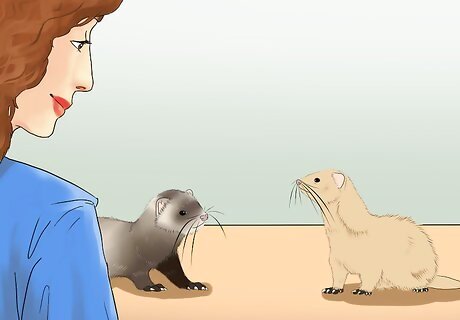
Ask if your older ferret can come along to choose the new one. If you already have a ferret at home, call shelters and ask if you can bring your ferret along to pick out the new one. You’ll be able to see which ones your ferret is naturally drawn to and gets along with. Bringing your ferret along will likely not be allowed at pet stores, so stick to shelters if you want to do this.

Look for playful wrestling or innocent chasing. Ferrets are very playful, and they like to wrestle and chase each other. Watch the way your ferret interacts with the others and choose one that your ferret chases or wrestles with. Just be sure they’re being playful rather than aggressive with each other. Signs of aggression or incompatibility include clamping down and biting the other ferret’s neck, or running away and cowering in fear. Ferrets love to chase each other though, so watch to see if the one being chased turns around to play eventually, or if it only runs and hides.
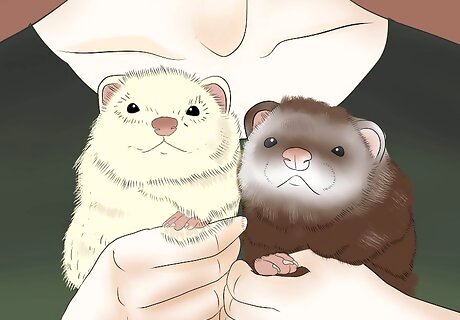
Select ferrets that are close in age. If your ferret is three years or older, pick out a ferret that is of a similar age. Young ferrets may have too much energy for your older ferret to tolerate, so try to find one that is in the same stage of life as yours.
Introducing Your Ferrets
Take your new ferret to the vet before introducing it to your other ferret. It's important that your new ferret gets a checkup and all its vaccinations before it meets the other ferret. If you can't go to the vet immediately, keep your ferrets separated until you're able to bring your new one to the vet.
Keep your ferrets separated for 2 weeks before you introduce them. There's a chance your new ferret could have a disease that you're not aware of. Keeping the ferrets separated will prevent any unknown diseases from spreading to your old ferret. After 2 weeks of keeping your ferret's separated, it should be safe to start gradually introducing them.
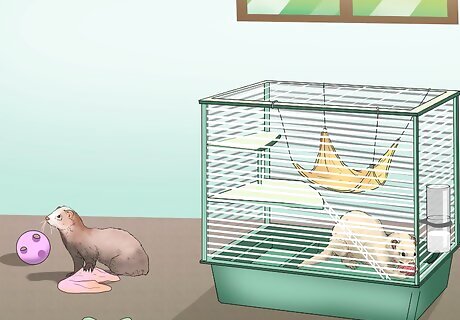
Allow your new ferret to roam the house before letting the old one out. Give your new ferret a few days to get used to its new home before you try to introduce it to any other pets. Keep it in a separate cage in a separate room from your other ferrets, and only allow it into main living areas when your other ferrets are safely shut away in another room.
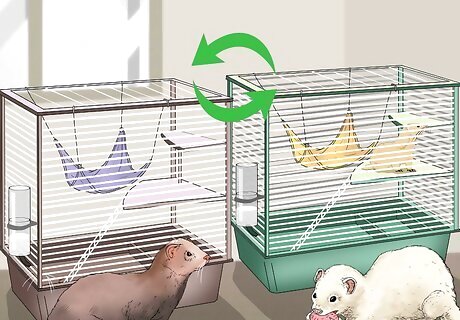
Swap the bedding between the cages for a few days. While your new ferret is getting accustomed to your home, swap some of the bedding amongst all the ferret cages you have. Let your new ferret sleep in its own bedding for a day, then move some of it over to your old ferret’s cage, and vice versa. This will get them all used to each other’s scents before being introduced.
Give your ferrets a bath before you introduce them so they smell alike. Bathe them separately but use the same ferret-safe product on both of them so they smell the same. Having your ferrets smell the same when they meet will make the introduction easier since they won't seem so different to each other.
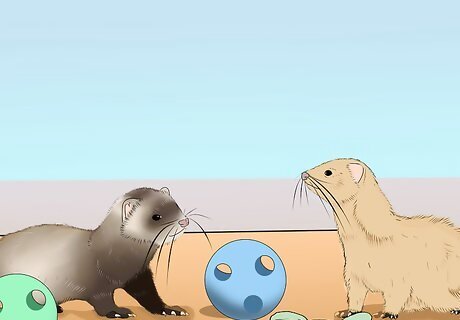
Introduce them in neutral territory. When it’s time for introductions, choose a neutral territory in your home. The living room or kitchen works well, but avoid being anywhere near a cage or hutch that one of the ferrets considers its own.

Supervise short play times. Start with short, 30-minute play times for all of your ferrets once or twice a day. Supervise them the entire time to watch their behaviors. If things are going well after about a week, allow them to play together whenever they’re out of their cages.
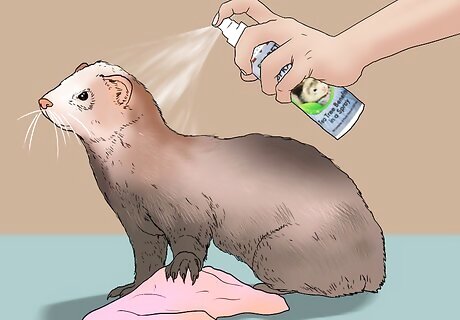
Spray their necks with Ferretone if playtime gets too rowdy. If your ferrets are wrestling, nipping, and getting rowdier than you would like, you don’t have to separate them right away. Spray the back of their necks with some Ferretone oil. Since they love the taste of it, the biting should turn to licking and they should calm down a little.

Separate the ferrets if you see signs of fear or violence. Allow them to sniff, wrestle, hiss, and even urinate on the floor to mark territory as they adjust to each other. Step in to separate them only if one continuously runs away in fear or one is clamping down and biting the other’s neck. Start the process over if you see this happening. Swap bedding for a few more days and then try the neutral-territory introduction again.
Be patient. The introduction process can take as little as a week or as much as six months. Don’t give up and take a ferret back to a shelter or pet store just because it’s taking a while for your pets to adapt to each other. Give it time and try not to stress out about it since your ferrets will pick up on your emotions.
Maintaining Multiple Ferrets
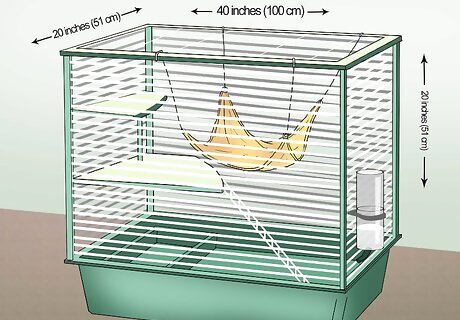
Select a cage that's at least 40 inches (100 cm) by 20 inches (51 cm). Once you spot your ferrets curling up together to cuddle outside the cage, you can move them in together. Find a wire cage that is at least 40 inches (100 cm) wide and 20 inches (51 cm) long, with a height of about 20 inches (51 cm). Bigger is always better though, so buy a larger cage if your space and budget allow for it. If you're raising more than two or three ferrets, consider purchasing a ferret hutch, which is a large enclosure that gives your ferrets extra room to run and climb around.
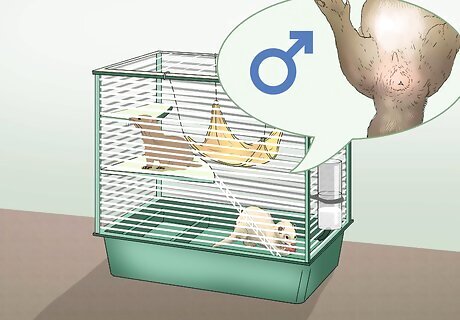
Keep unneutered males in a separate cage. It’s best to neuter and spay all of your ferrets, but if you have an unneutered male in your group, keep him in his own cage. He can become territorial, especially during the breeding season, and may harm your other ferrets. They can still play together, but keep play time away from his cage as he may see this as encroaching upon his territory.
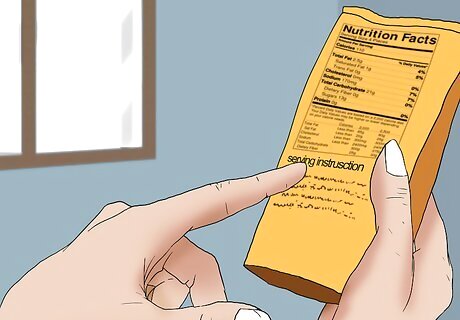
Serve the prescribed amount of food for your number of ferrets. If you offer your ferrets dry food, follow the serving instructions on the packaging carefully. Servings will typically be about 3/4 cup (96 g) per ferret per day. Dole these out once a day into the same dish (or separate ones if your prefer), and don't be concerned if the food disappears quickly. Ferrets are scavengers, so they hide their food to eat later.
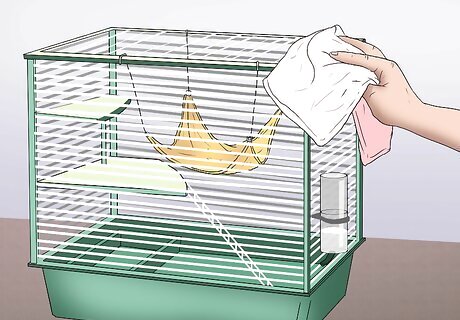
Clean the cage regularly. The more ferrets you have, the dirtier the cage will get. Scoop or replace the litter once a day to remove feces, and change out the bedding once a week. When you change the bedding, wipe down the bars, ramps, and bottom of the cage with a baby wipe or damp paper towel. Give the cage a deep cleaning at least once a year. Spray it down with a diluted bleach solution and then rinse it thoroughly.
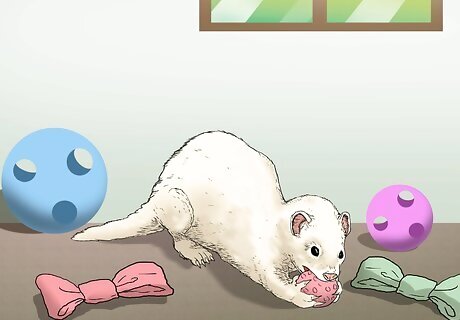
Provide a variety of toys for your ferrets to play with. Ferrets are great at playing together and entertaining themselves, but they still like to play with toys. You can buy toys at pet supply stores, or give them things you already have at home. Offer them empty paper towel rolls, cardboard boxes, golf balls, or plastic balls with bells inside. Supervise them while they play with toys to be sure that they’re not ingesting any shredded materials.
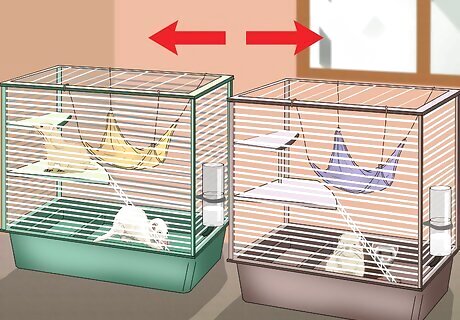
Keep separate groups if your ferrets don’t get along. There’s a chance that, no matter how hard you try, one of your ferrets won’t get along with the others. If one ferret is too violent or too fearful to create a safe, comfortable bond with the others, keep them separate. House them in separate cages in different rooms of the house. Continue to periodically try supervised playtimes, but don’t force a relationship that stresses your pets out.












Comments
0 comment